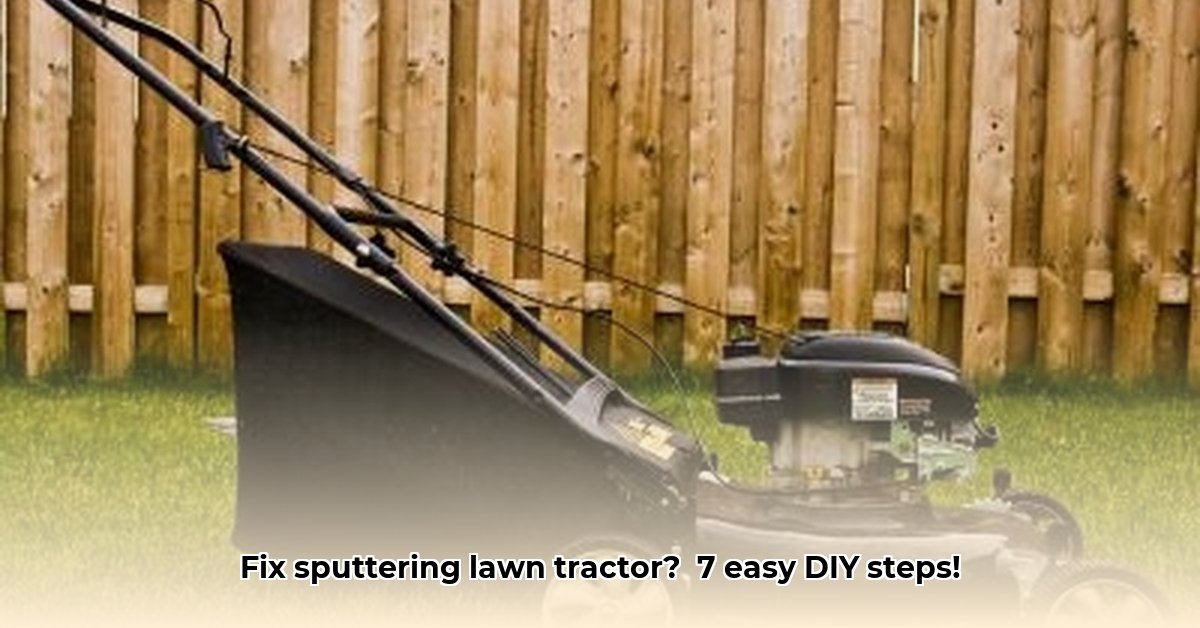
A sputtering lawn tractor is frustrating, but often easily fixed. This guide provides a step-by-step approach to troubleshooting common causes, from simple fuel issues to spark plug problems. For more resources, check out this helpful guide on lawn tractor maintenance. Let's get your mower back in action!
1. Safety First: Disconnect Power
Before starting any repairs, always disconnect the spark plug wire from the spark plug and the negative terminal from the battery. This crucial step prevents accidental starts and protects you from electrical shocks.
2. Fuel Freshness Check: Is Your Gas Good?
Old gasoline is a common culprit. Stale fuel leaves gummy residue that clogs components. Check the fuel's smell; does it smell fresh? If it's been sitting over a month, drain it (carefully!) using the petcock (if present) into a suitable container, and refill with fresh, high-quality gasoline.
3. Fuel Filter Inspection: Clean Fuel Flow
The fuel filter prevents debris from reaching the engine. Locate it (usually near the fuel tank; consult your owner's manual). Is it dirty or clogged? A dirty fuel filter severely restricts fuel flow to the carburetor. Replacing it is inexpensive and often solves the sputtering problem. Simply unscrew the old and screw on the new filter.
4. Fuel Lines: Check for Leaks and Blockages
Inspect the fuel lines (tubes carrying fuel from tank to carburetor) for cracks, kinks, or damage. Pay close attention to connections. Leaks, blockages, or damaged sections need repair or replacement. A compromised fuel line disrupts the steady fuel supply, leading to sputtering.
5. Gas Cap Vent: Ensuring Proper Ventilation
A blocked gas cap vent prevents proper air intake into the fuel tank, hindering fuel flow. Remove the gas cap and examine the vent. If blocked, carefully clean it with a small wire or compressed air. Proper ventilation is essential for consistent fuel delivery.
6. Carburetor: Cleaning or Replacement?
The carburetor mixes air and fuel. A dirty carburetor is a frequent sputtering cause. Cleaning or replacing it are possible solutions.
Carburetor Cleaning vs. Replacement:
| Feature | Cleaning | Replacement |
|---|---|---|
| Cost | Low | Moderate to High |
| Time Commitment | Moderate | Relatively quick (once you have the part) |
| Skill Required | Some mechanical aptitude helpful | Minimal |
| Effectiveness | Often effective for minor issues only | Guaranteed solution for carburetor issues |
Cleaning involves disassembling and thoroughly cleaning the carburetor components. Many online resources explain this process. If cleaning proves ineffective or you lack the experience, replace the carburetor. Consult your owner's manual for a compatible part.
7. Spark Plug Check: Ignition System Integrity
A fouled or improperly gapped spark plug prevents proper ignition. Locate the spark plug. Remove it and inspect its condition. Check the plug gap (consult your owner's manual). Replace if dirty, damaged, or the gap is incorrect. Also, check the spark plug wire for cracks or damage. Replace as needed. A functioning spark plug reliably ignites the air/fuel mixture, which ensures smooth engine operation.
Preventative Maintenance: Long-Term Solutions
Regular maintenance prevents future sputtering:
- Annual fuel filter replacement.
- Regular fuel line inspection.
- Annual spark plug cleaning/replacement.
- Use fresh fuel.
- Proper off-season storage.
By following these steps, you significantly improve the chances of resolving your lawn tractor's sputtering problem. Remember, a systematic approach and patience are crucial. If problems persist, consider seeking professional help.